Flags are more than just colorful pieces of fabric. They stand for a country’s identity, history, and pride. Still, many national flags around the world look surprisingly alike. Why do countries choose such similar designs, and what connects these lookalike flags? In this article, we’ll look at some of the most similar flags and the interesting stories behind them.
Countries often pick similar flag colors and patterns because of shared history, political ties, revolutions, or colonial influence. Sometimes, nations also end up with similar designs simply by following the basic rules of good flag design, which favor simplicity.
Vexillology, the study of flags, attracts fans all over the world. Many enjoy finding the small differences between flags that look almost the same. Here are five pairs of national flags that closely resemble each other, along with the stories that connect them.
Romania and Chad
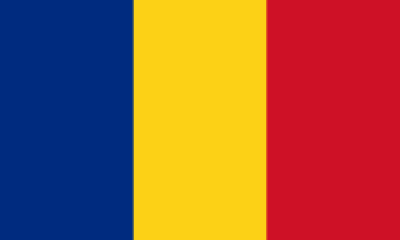
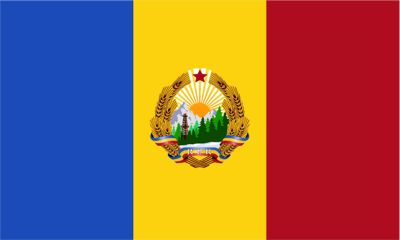
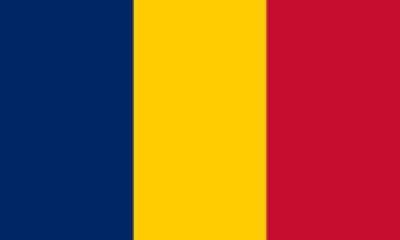
One of the most well-known examples of similar flags is Romania and Chad. At first glance, their flags look almost identical: both have vertical stripes of blue, yellow, and red from left to right. The main difference is the shade of blue. Romania’s blue is lighter, while Chad’s is darker. Otherwise, the flags have the same proportions and layout, making them hard to tell apart unless you look closely.
The Romanian tricolor originated in the 1848 revolution and was chosen to represent liberty, justice, and unity. After becoming a communist state in 1947, Romania added a central socialist emblem to the center of the flag that remained for decades.
Chad adopted its flag in 1959, merging the French tricolor with regional colors symbolizing African identity and landscape. With a simple tricolor design and no emblems, Chad’s flag differed from Romania’s communist-era version.
During the Romanian Revolution of 1989, protesters cut the communist emblem out of the flag, creating the famous “hole flags.” This became a defining image of the movement. In 1990, Romania brought back its plain tricolor.
Both countries adopted nearly identical color combinations for distinct historical reasons, resulting in one of the world’s closest flag matches.
Indonesia and Monaco
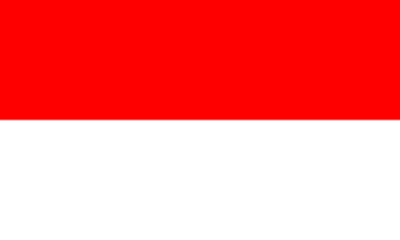
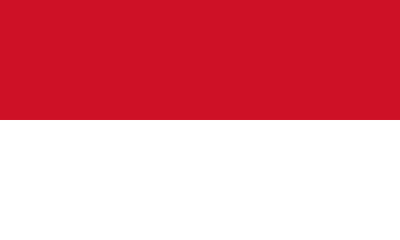
Another pair of nearly identical flags is Indonesia and Monaco. Both are composed of two horizontal stripes, with red on top and white on the bottom. The only visual difference is their shape: Indonesia’s flag is longer, with a 2:3 ratio, while Monaco’s is shorter and closer to a square, with a 4:5 ratio.
Indonesia’s red-and-white flag traces its roots to the Majapahit Empire (13th–16th centuries), whose banners used this color scheme. Over time, these colors came to symbolize important cultural ideas in Indonesian society. Red often represented courage or the human body, while white symbolized purity or the human spirit. Indonesia’s 1945 independence brought the adoption of the red-and-white banner, first raised during the official proclamation.
Monaco’s flag colors come from the House of Grimaldi’s heraldry, used for centuries since the 1200s. Charles III of Monaco officiated the adoption of the modern flag in 1881. After Indonesia adopted its flag, Monaco raised concerns, but Indonesia’s historical claim led both countries to keep their similar flags.
Despite being on opposite sides of the world, both nations have flags that are almost indistinguishable today.
Netherlands and Luxembourg
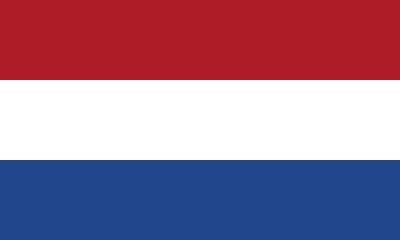
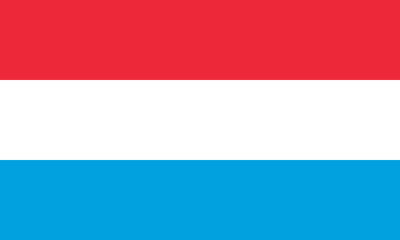
The flags of the Netherlands and Luxembourg are another famous example of similar designs. Both have three horizontal stripes of red, white, and blue. The differences are subtle: the Netherlands’ blue is darker, and its flag has a 2:3 ratio compared to Luxembourg’s lighter blue and a longer flag with a 5:8 ratio.
The Dutch flag, one of the world’s oldest tricolors, dates to the 16th-century Dutch Revolt against Spanish rule. The earliest Dutch flag, the Prince’s Flag, honored William of Orange with orange, white, and blue stripes. As orange dye became less available, red replaced orange, forming the modern Dutch tricolor in the 17th century.
Luxembourg’s flag colors are inspired by its coat of arms, which features a red lion on a blue and white background. In the 19th century, Luxembourg created its horizontal tricolor using these colors.
Luxembourg and the Netherlands shared a monarch from 1815 to 1890, influencing Luxembourg’s flag design. Dutch influence during the shared monarchy likely reinforced Luxembourg’s similar flag, even though they were politically separate.
People often mix up these two flags, and Luxembourg has even thought about changing its flag. However, the original flag is still used today.
Australia and New Zealand
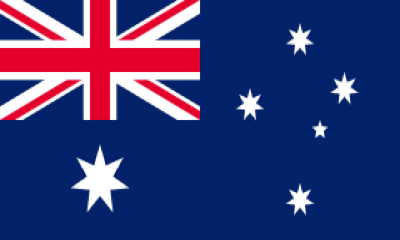
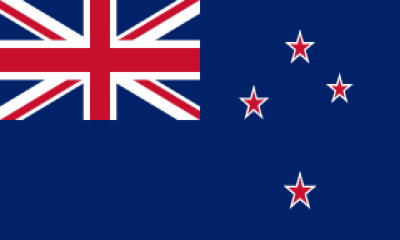
Australia and New Zealand probably have the most famous pair of similar flags. Both share several key features:
- A dark blue background
- The Union Jack in the upper corner
- Stars representing the Southern Cross
These flags look alike because both countries were once part of the United Kingdom’s colonial empire. Many British colonies created flags that mixed the Union Jack with local symbols.
At first glance, these flags appear quite similar. However, there are clear visual differences that set them apart, such as the number, color, and arrangement of stars.
Australia’s flag includes six white stars: a large seven-pointed Commonwealth Star beneath the Union Jack, and five stars forming the Southern Cross constellation on the right. New Zealand’s flag features only four stars, each red with a white border, arranged to form the Southern Cross. The stars on Australia’s flag vary in size, and all are white, while New Zealand’s are smaller, red, and outlined in white.
The similarity between the two flags has sparked decades of friendly debate. In fact, New Zealand held a nationwide referendum between 2015 and 2016 to consider replacing its flag with a more distinctive design. One of the most popular alternative designs featured a silver fern on a black-and-blue background, a nod to New Zealand’s beloved national plant and sports teams. In a quirky twist during the campaign, some voters even rallied around a playful ‘Laser Kiwi’ flag, which depicted a kiwi bird shooting a green laser from its eye. After extensive discussion and public voting, the country ultimately decided to keep its traditional flag.
Ireland and the Ivory Coast
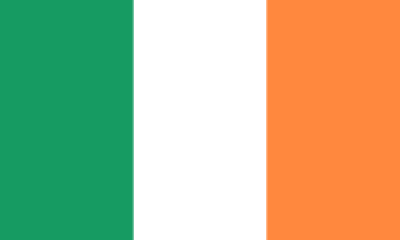

The last pair on this list has an interesting visual twist. The flags of Ireland and The Ivory Coast look like mirror images of each other.
Ireland’s flag has vertical green, white, and orange stripes from left to right. The Ivory Coast’s flag uses the same three colors but in the order orange, white, and green. With flagpoles on the left, green is closest to Ireland’s flag, orange to the Ivory Coast’s. This reversal creates a mirror effect, making the leftmost strip the key distinguishing factor.
Ireland’s flag, introduced in 1848, symbolizes hope for peace: green for Irish Catholics and nationalists, orange for Protestants with William III, and white for unity.
Ivory Coast adopted its flag in 1959 upon independence from France—orange for savannahs, white for peace, green for forests, and hope.
Even though the flags were created separately, their reversed color order makes them look very similar.
Why So Many Flags Look Alike
Around the world, national flags often follow similar design principles. These rules focus on simplicity, making flags easy to spot from afar and easy to make from different materials. Simple designs help people quickly recognize a country’s flag, which strengthens national identity. In the past, it was also important to keep designs easy to reproduce, since complicated patterns were hard to copy. That’s why many flags use basic shapes like stripes and tricolors.
History has also shaped flag designs. Color traditions like Pan-Slavic, Pan-African, and Pan-Arab have influenced many countries as they became independent or created new political identities.
With so many national flags, some overlap is inevitable.
But these similarities between national flags are not just a coincidence. They show deeper historical connections and how ideas spread across borders. By looking at these patterns, we can see how flags change and reflect national identities over time. Flags are not only symbols of countries but also pieces of history that tell bigger cultural and political stories.